Bienvenido de nuevo
Inicia sesión en tu cuenta de Altimeter Cloud
¿No tienes cuenta? Crear una
Crear una cuenta gratuita
Te enviaremos un enlace de confirmación por correo. Revisa tu carpeta de spam si no lo recibes.
¿Ya tienes cuenta? Iniciar sesión
 Inicio
 Dispositivo: N-P85-E0D8
 Vuelo ID: 479
Mostrar eventos
Descargar
Ajustar temp. & presión ?
Imagen
Conjuntos de datos
Haga clic en la leyenda para mostrar u ocultar los datos
Zoom
Clic y arrastre, o pellizco en móvil
Comparar vuelo ?
Resumen del vuelo
Altitud
Apogeo
36.89 Metros
Tiempo al apogeo
11.82 seconds
Altitud fin combustión
52.26 m
Altitud vel. máx.
6.56 m
Altitud eyección
0 m
Altitud aterrizaje
45.83 m
Estabilidad
Puntuación estabilidad
0.1 / 100 (Pobre)
Desglose de estabilidad
Inclinación al apagado (20%)0
Constancia de inclinación (15%)0
Cabeceo/guiñada (30%)0
Amortiguación (20%)0
Rectitud de empuje (15%)0
Velocidad
Máx. ascenso
6.06 m/s
Máx. descenso
-6.92 m/s
En fin combustión
-0.030 m/s
Vel. aterrizaje
0.317 m/s
Vel. descenso
0.668 m/s
Vel. eyección
m/s
Recovery
Single deploy (no dual deploy detected)
Aceleración
Máx. ascenso
1.17 G
Máx. descenso
10.06 G
Máx. durante combustión
1.61 G
Prom. ascenso
0.19 G
Prom. combustión
0.14 G
Tiempos
Fin combustión (primero)
55.07 seconds
Apogeo
11.82 seconds
Posible eyección
55.976 seconds
Aterrizaje
24.65 seconds
Salida #1 ON
0 seconds
Salida #1 OFF
0 seconds
Ángulos
Inclinación rampa
71.87°
Incl. máx. hasta fin comb.
97.41°
Alabeo al lanzamiento
33.63°
Cabeceo al lanzamiento
67.98°
Giro máx. (comb.)
110.91 dps
Giro prom. (comb.)
28.61 dps
General
Fecha subida
28-Jul at 18:17
Muestras de datos
1700
Tiempo total grabación
147.400 s
Prom. muestras/s
11.5
Número de bloqueos
1
Altitud grabación
-7.88 m
Lanzamiento tras encendido
3m 51s
Eje de referencia
Z
Batería & temperatura
Batería inicio
0%
Batería fin
0%
Temperatura inicio
31.99°C
Temperatura fin
30.44°C
Temp. MT1 lanzamiento
0°C
Reglas de salida
Sin reglas configuradas
Animación de datos
FLIGHT 479
36.89 Meters
ALTITUDE
0.00m
VELOCITY
0.00m/s
ACCEL
0.00G
TILT
0.00°
PITCH
0.00°
ROLL
0.00°
YAW
0.00°
TIME
0.00s
AWAITING LAUNCH
ALT
altimetercloud.com
LAUNCH
T+0.00s
LANDING
BURNOUT
Motor burn complete
Nota: La animación de vuelo requiere que su altímetro esté montado en una orientación fija. Calibre sus sensores para mejores resultados.
Notas del usuario
Añada este dispositivo a su cuenta para editar
Vídeo Youtube
Sin vídeo
Añada este dispositivo a su cuenta para editar
Imágenes del vuelo (0)
Sin imágenes
Cohete vinculado
Ningún cohete vinculado a este vuelo
Información del dispositivo
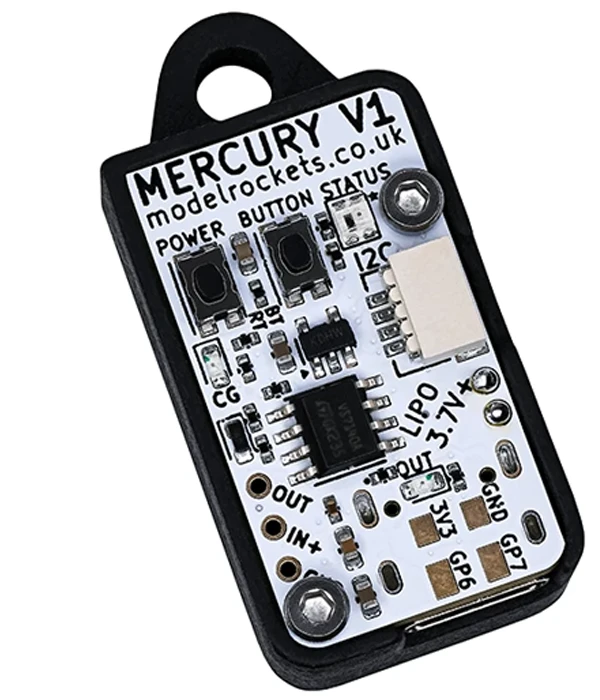
Mercury V1
Este vuelo se realizó con un Mercury V1.
Versión hardware
Rev 1
Versión software
1.23B
Última conexión
09-Apr at 12:59
Acelerómetro
32G 3-axis
Giroscopio
2000 dgps 3-axis
Sensor presión
Bosch BMP 390
Magnetómetro
N/A
Motores del vuelo
No se han añadido motores a este vuelo
Añada este dispositivo a su cuenta para editar
Sitio de lanzamiento, fecha y hora
Haga clic en el mapa para marcar su sitio de lanzamiento. Cambie entre vista de mapa y satélite.
No results found — try a different search.
Clic en el mapa · Arrastre para ajustar
Lat—
Lng—
✓ Launch location saved successfully.
✗ Could not save location — please try again.
Reglas de salida
Reglas de salida were not available until firmware 2.0
Coincidencia motor (BETA)
Aún en modo de prueba. Estamos averiguando qué motor se usó en el vuelo.
Marca
Motor
Puntos
Forma
Comb.
Contrail
G300
97
96.6%
90.4%
Cesaroni
25-E75-VM-17A
77
99.3%
79.2%
Cesaroni
68-F240-VM-15A
53
99.1%
84.7%
AeroTech
H669N
53
96.5%
78.1%
Estes
1/4A3T
30
87.4%
62.5%
Estes
1/2A6
0
74%
55.2%
Combustión del motor
Esta es la magnitud de salida del acelerómetro desde el lanzamiento hasta el fin de combustión.
You can check this against your motors thrust data on thrustcurve.org.
Ajustes generales del vuelo
Esta es una captura de los ajustes utilizados para este vuelo. Visite la
Visite la página Mis dispositivos y configure los ajustes..
Presión prevista
i
Set this to your local forecast pressure at sea level. This will offer you slightly improved accuracty for your flight, although it's not 100% essential every little helps!
Xcweather.co.uk is a decent place to grab pressures from for your location and time.
Xcweather.co.uk is a decent place to grab pressures from for your location and time.
1018 mbar
Detección lanzamiento
i
This is the altitude above the launch pad altitude where the altimeter will trigger itself into recording / flight mode.
The altimeter keeps a constant average of the pressure while waiting for launch, it uses a simple algorithm and the pre-flight buffers to do this. The most recent 120 samples (~4 seconds) are ignored so your pre-trigger altitude won't effect the ground baseline.
For almost all uses we suggest keeping this on the 25 Meter (~82 feet) default settings. If you want to test your altimeter by throwing it in the air, or are planning a very low flight you may want to lower the setting.
The altimeter keeps a constant average of the pressure while waiting for launch, it uses a simple algorithm and the pre-flight buffers to do this. The most recent 120 samples (~4 seconds) are ignored so your pre-trigger altitude won't effect the ground baseline.
For almost all uses we suggest keeping this on the 25 Meter (~82 feet) default settings. If you want to test your altimeter by throwing it in the air, or are planning a very low flight you may want to lower the setting.
2
meters
Frecuencia muestreo
i
The base sample rate of the altimeter's sensors in samples per second. This setting was deprecated in firmware 2.0+.
11 Hz
Sample ratio
i
The altimeter runs at 50Hz however you can record every sample or every X samples in order to extend the log time. For example if you set the ratio to 1 it will save 1:1 samples, or if you set it to 3 it will save 1 in 3 samples.
1:
Max samples
i
This is the maximum samples the altimeter will log per flight. When it reaches this amount it will stop and save the recording.
0
Recording stop
i
This setting is how the altimeter decides to stop recording. You can choose either 300 or 600 samples stable or it will record until it's 10000 sample limit unless you press the BUTTON in Manual stop mode.
The samples stable method waits for the devices altitude not to change for the set number of samples. This is defined by not changing by more than +/- 1.0 meters for 98% of the samples, it's a reliable method to stop the recording after landing within 8-10 seconds (300 sample) or 16-20 seconds (600 sample).
The samples stable method waits for the devices altitude not to change for the set number of samples. This is defined by not changing by more than +/- 1.0 meters for 98% of the samples, it's a reliable method to stop the recording after landing within 8-10 seconds (300 sample) or 16-20 seconds (600 sample).
Auto: 300 samples stable
Oversampling
i
Oversampling is a internal setting of the BMP 390 pressure sensor. It is how many samples are taken for each reading. By taking multiple samples for each pressure reading the altimeter reduces noise and increases the resolution of the output.
The sensor can run at 50 samples per second in 4X mode, so we suggest leaving it in this mode as it will offer the highest accuracy.
The sensor can run at 50 samples per second in 4X mode, so we suggest leaving it in this mode as it will offer the highest accuracy.
4x Oversampling
IIR filter
i
The IIR filter is another internal sensor for the BMP390 pressure sensor. It is a Infinite impulse response filter used to enhance pressure measurement accuracy by reducing noise. It's primarily for smoothing out rapid pressure changes.
We suggest not setting this too high as it will cause delay to changes in altitude if set very high.
We suggest not setting this too high as it will cause delay to changes in altitude if set very high.
COEFF 3
Pressure filter
i
This filter is a software Kalman filter that runs on the altimeters processor.
The Kalman filter uses a prediction step based on a system model and then a correction step using new measurements to refine its estimate, it creates accurate most certain results from data with noise in it.
The Kalman filter uses a prediction step based on a system model and then a correction step using new measurements to refine its estimate, it creates accurate most certain results from data with noise in it.
Kalman 2 (default)
Lockout time
i
The Lockout time is how long the altimeter should stop making decisions and taking actions if it detects unusual high speed altitude changes that are unexpected.
These false readings can be caused by ejection charges (if the altimeter is in the same compartment as the motor ejection gases) or even when you transition to Mach speeds and can give false readings of altitude changes.
When these events are detected the system enters Lockout for the specified time while it stabalises. This effects things like triggering the output, or calculating other data.
These false readings can be caused by ejection charges (if the altimeter is in the same compartment as the motor ejection gases) or even when you transition to Mach speeds and can give false readings of altitude changes.
When these events are detected the system enters Lockout for the specified time while it stabalises. This effects things like triggering the output, or calculating other data.
750ms
Lockout change
i
This is how we detect a lockout. If the pressure changes by this much in a single sample downwards (pressure increase, lower altitude) then it's likely to be a false reading. Multiply the setting by 32 to get the speed in meters per second that it will trigger at.
1.5 meters
Sync sensors
i
The filters on the pressure sensor can cause it to lag very slightly behind the Accelerometer and Gyroscope data.
The Sync sensors option detects how far out of sync these sensors are. It then corrects the Acceleration and Gyroscope readings to match the pressure sensor.
ACTIVADO (1 samples / 31.00ms)
Orientation
i
This is the orientation you intend to install the Altimeter in your rocket. It's needed to ensure completly accurate angles and orientation charts and reports. Check out the Manual for more information on this.
Upwards (text up)
IMU filter
i
The IMU filter, or fusion filter takes the data from each axis of the Gyroscope and Accelerometer to calculate the Pitch, Roll, Yaw and tilt angle from vertical.
These filters can build up some discrepency over time so it's important to calibrate your sensors to minimise this.
Madgwick 6-Axis
Launch ALP
i
This is prevention against accidental launch detection.
With this disabled the launch is based only on pressure and something that creates a low pressure can trigger the flight by accident. For example pulling your nose cone off can even trigger it.
With this enabled the rocket also needs to have seen 8 samples (0.25 seconds) of acceleration above this setting in the last 3 seconds as well as the pressure drop to trigger. There is a backup trigger of 1.05 seconds of altitude being above the launch detect setting too.
There are very few situations where this option would cause issues, so we suggest leaving it on.
With this disabled the launch is based only on pressure and something that creates a low pressure can trigger the flight by accident. For example pulling your nose cone off can even trigger it.
With this enabled the rocket also needs to have seen 8 samples (0.25 seconds) of acceleration above this setting in the last 3 seconds as well as the pressure drop to trigger. There is a backup trigger of 1.05 seconds of altitude being above the launch detect setting too.
There are very few situations where this option would cause issues, so we suggest leaving it on.
Disabled
Launch lock
i
When enabled, the altimeter locks out recording for a set period after power on to prevent false triggering during setup.
DISABLED
Static temperature
i
A fixed temperature value used for altitude calculation when the external temperature sensor is disabled or not connected.
15 °C
Temp sensor
i
If an external MT1 temperature sensor is connected, this controls whether it is used for logging only or also for altitude calculations.
Ajustes de salida
Esta es una captura de los ajustes utilizados para este vuelo.
Salida 1 activada
i
Disable or enable the output from being able to turn on or off.
DESACTIVADO
Salida 1 disparador
i
After apogee (altitude)
This method triggers when the altitude drops below the set altitude after apogee is detected.After apogee (time)
This method triggers the defined seconds after apogee is detected.After launch (altitude)
This method is activated if/once the altimeter exceeds the set altitude after launch.After launch (time)
This option triggers the defined seconds after launch is detected.After burnout (time)
This method triggers the defined seconds after burnout is detected.
After apogee (altitude)
Salida 1 tiempo encendido
i
This is how long the output should trigger ON state when the rules are met.
2000ms
Salida 1 altitud
i
This is the altitude to trigger at if using a trigger method that works on altitude.
For example if you set this to 75m and After apogee (altitude) for the trigger then the output will turn on at 75m on descent above the launch altitude.
For example if you set this to 75m and After apogee (altitude) for the trigger then the output will turn on at 75m on descent above the launch altitude.
0 meters
Salida 1 tiempo
i
This is the time variable for output triggers that work on time.
For example if you set this to 3 seconds and After apogee (time) as the trigger then the output will turn on 3 seconds after apogee.
For example if you set this to 3 seconds and After apogee (time) as the trigger then the output will turn on 3 seconds after apogee.
0 seconds
Bloqueo altitud
i
Altitude lock is a safety feature that prevents the output from triggering if the altitude is below this level when the rules are met.
50.00 m
Bloqueo inclinación
i
This is another safety feature. It can be used to disable the output if the rocket has gone too far from vertical.
For example if you set the tilt angle lock to 40 degrees then the output will not fire if the rocket is more than 40 degrees from vertical. To disable set this to 0.
For example if you set the tilt angle lock to 40 degrees then the output will not fire if the rocket is more than 40 degrees from vertical. To disable set this to 0.
0.00 °
Calibración de sensores
Compensaciones de calibración usadas en este vuelo.
Giroscopio
⚠ El giroscopio no ha sido calibrado
X
0.000°
Y
0.000°
Z
0.000°
Acelerómetro
X
20.340 mG
Y
4.920 mG
Z
26.210 mG
Ajustes del dispositivo
Esta es una captura de los ajustes utilizados para este vuelo.
Esta es una captura de los ajustes utilizados para este vuelo.
TAG dispositivo
i
A custom name or tag assigned to this device for easy identification.
Merc2908
Idioma
i
The language setting configured on the device.
en
Modo apagado
i
Controls what happens after recording. Standard shuts down normally, Delayed keeps WiFi on for 30 seconds after landing, Stay on keeps the device powered on.
Delayed 30s
Brillo LED
i
The brightness level of the LED indicators on the Mercury. Lower values save battery.
Potencia WiFi TX
i
WiFi transmit power level. Higher gives better range but uses more battery.
Modo reposo
i
Controls whether the device enters low-power sleep when idle.
Stay awake
Monitor batería
i
Monitors battery voltage during the flight.
ENABLED
Grupo cloud
i
The cloud group / category this flight is assigned to.
Puertos GP6 / GP7
El control de puertos GP no estaba disponible hasta el firmware 2.0
Placa servo I2C PCA9685
El control de puertos GP no estaba disponible hasta el firmware 2.0
Predicción y aerofrenos
Esta función no estaba disponible hasta la versión 2.10+
Comentarios
Comentarios
Inicia sesión para comentar.
Inicia sesión para comentar.